Winchester Writers’ Festival Writing Competition Placement

Screen Shot 2015-07-14 at 16.12.33
I was very pleased to hear that a first draft chapter of my new project written this year at a Freefall Writing retreat in Portugal, won a ‘Highly Commended’ award at the 2015 Winchester Writers’ Festival Writing Competitions.

As part of the award, we receive feedback from the judges:

This was a very good account of a moment of departure told from a child’s point of view. The writing is full of detail and is extremely funny in places. I liked that this isn’t an airbrushed account. At times the experience feels uncomfortable and that is conveyed in the writing. This is a well told story that includes a real sense of tension and jeopardy. There are strong characters and complex family relationships are conveyed. I finished with vivid impressions of mother, Bonma, Michael and the dog. In a strong field this piece deserved its place on the shortlist.

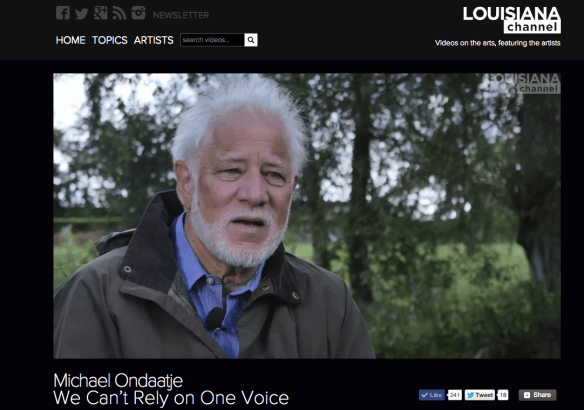
Michael Ondaatje on Writing

Screen Shot 2015-06-16 at 14.46.37The great Michael Ondaatje on writing. Well worth watching. I love his image of writing a novel being like holding 35 things while getting to the elevator. Also, how writing is discovery.  He is interested in finding out about something, through the characters and the time period; how he is interested in not relying on one voice, that in his later books 3 or 4 people who are not related who become a family by the situation. “It’s a community, as opposed to one voice.”

Michael Ondaatje | Louisiana Channel.

Identity Crisis

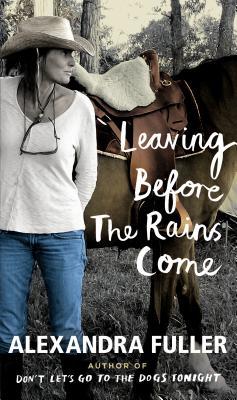
22529144Last night I attended an event where Alexandra Fuller discussed her new memoir, Leaving Before the Rains Come.

Don’t Let’s Go To The Dogs Tonight, her earlier memoir of growing-up in Zimbabwe, Malawi and Zambia in the 1970s and 1980s, left a deep impression on me. It’s a powerful and powerfully written story, and my own life shares some similarities, so I was delighted to meet her in person. It was a wonderful, inspiring evening.

Alexandra talked about a lot of things. What particularly strikes me now is what she said about identity. She has in the past been criticised for subtitling Don’t Let’s Go To The Dogs Tonight “An African Childhood” – and for stating that she is an African, “first and foremost.” (I presume the criticisms were mostly because Africa is not a single country.) I wanted to ask her more about what she means by saying she has an African mind and soul, something I’d read in an interview in preparation for the event, but time was short and so I asked another question, one about the long-term consequences of trauma. Nevertheless, this issue about identity is an important one for me.

I was born in South Africa, but left when I was seven, so my time in Southern Africa was much shorter than Alexandra’s, and when I do visit, I don’t have a feeling of coming home, unlike Alexandra. I have three passports, South African, Canadian and British. I was educated mostly in England, but have lived many years in Canada and Ireland, and have lived for extensive periods in other countries: Greece, Germany, France, Australia. On ‘the road’ throughout Asia.

I have struggled to find ‘home’. I am not even sure what it means to feel ‘at home’ in a place – a town, a country, a house or apartment. In my body, even. I know they (who are ‘they’?) say “Home is where the heart is, but this has never been much solace or use.

As I grew up, I began to identify myself as European. I felt at ease in Paris, London. In Berlin and Athens. I loved sitting in cafés, people-watching. I loved to discuss art, philosophy and Life in General. The authors I read were predominantly English, French, German (in translation) and, of course, the Greek classics (my degree is in Ancient Greek). I thought I felt European. It’s what I told people when they asked. It was better than saying ‘English’ because I certainly didn’t feel English, and the English certainly seemed to think I wasn’t one of them. I could hardly call myself French, or German or Greek.

So European it was, until someone I respected laughed out loud when I told them.

You’re not European,” she said. “You’re North American.”

I instantly rejected this assessment. I’d been living in Canada for many years, and had a Canadian passport, and even a Canadian husband for a while (but he had Japanese heritage and was born in Buffalo, New York…), but me, North American? No, never. And definitely not Canadian (I had absorbed the usual (boring) judgements about Canadians: “boring”).

But as the years went on, and my little struggle for identity put on the back burner as there were so many other things to worry about, I realised that I felt more at ease amongst Canadians and Americans. I loved them for their (generalisation alert) friendliness. When meeting someone new, if they were North American, I felt as if was actually worth meeting. But when presented to a new person who happened to be English, the experience was vastly different. The unspoken phrase was the same: “Hello, and who are you?” but the Americans said it with bright, open friendliness and the English with a guarded suspicion.

So I re-aligned my compass: perhaps I had a North American soul, even though I was not born there and nor were any of my ancestors, as far as I knew.  If I include my reading habits, and indeed where I’m mostly published, my preferences in literature have become quite ‘North American.’

But still I wondered.

When I read about how Alexandra Fuller felt about Africa, I began to think perhaps I too had an African ‘soul’, that in spite of my few years in Southern Africa, and not feeling ‘at home’ there, I had been indelibly imprinted in some way.
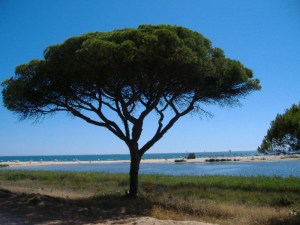
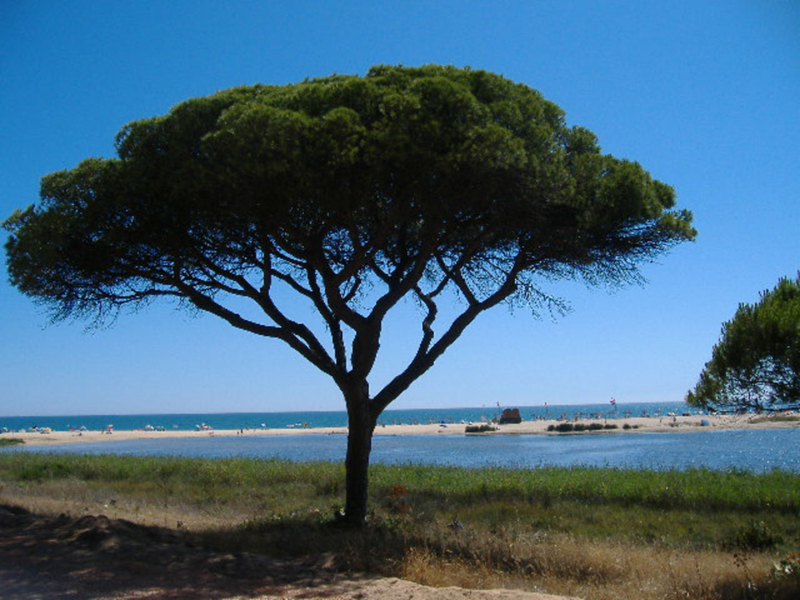
umbrellapineI have a very strong (positive) emotional response to certain landscapes, climates, trees and sounds.  I love the hot, the dry, the subtropical, I love the umbrella pines of the Mediterranean. The sound of crickets has an instant calming effect on my body. I crave the gold and sand colours of the desert; I crave huge vistas and vast night skies. (I fell in love with Australia for all those things.)

My idea of heaven is a languid late afternoon sitting on a verandah watching the sun go down.

africantreeThe iconic tree of Africa is the umbrella thorn acacia, very similar to the umbrella pine. I was born in Johannesburg, which has a subtropical climate, but I remember it for its hot days and cool, ‘desert’ nights, night so pitch you can barely see your hand in front of your face, stars bright enough to hurt. My few trips back to South Africa have included many long evenings watching stars, listening to the night sounds (sipping something cold and alcoholic).

And then yesterday, I heard Alexandra Fuller say (I’m paraphrasing) “The trouble with having a national identity, is that you end up having to fight for it.”

A penny finally dropped. Yes, of course there are so many aspects of Africa, of Europe, of America, of the people who live there, that I love, that I identify with, that I yearn for when I’m not there.  But perhaps I don’t need to keep searching for one particular national identification.

In the past I have sat in meditation for hours, for days, in fact, asking the question: “Who am I?”

The answer to this question is unsayable. Not because I don’t want to say it, but simply because the answer is ineffable.*

Sometimes, when I’m feeling particularly awry, wherever I am, I whisper to myself “I am here.”

photocomp
*Think Walt Whitman: Do I contradict myself? Very well then I contradict myself, (I am large, I contain multitudes.)

After The End

I was going to title this blog ‘When you finish your novel, what then?’ Not that I have any tips, but simply because I’m in this awkward no-man’s land of having finished one long work, and I haven’t quite started writing a new project. I don’t like this place at all. I then Googled (of course) ‘When you finish your novel, what then?’ and found (of course) a plethora of blogs on the subject, in fact one titled with this very question.  Holly Robinson writes:

Unfortunately, what follows isn’t always instant acceptance by an agent, an editor, or even your beta readers and friends. Usually what happens is the calm before the calm, a big yawning hole of deafening silence as you wait for somebody, anybody, even your mom, to please please please read the book and tell you what they think.

Meanwhile, you experience doom-and-gloom sentiments: “What good am I? I can’t even pick up the living room!” Maybe you think, “The novel is dead. Why do I bother? Nobody reads anymore.” Or, “I’m not earning money doing this. In fact, I’m costing myself money! I should quit before my family has to live out of the car!”

Most of all, you feel bereft, because the characters you’ve been living with for the past nine months or nine years have stopped living in your head. The voices are quiet. Gardening and housework can help ease the pain of saying goodbye to those people you came to know better than your own friends. So can reading — because it brings you back to that place where you can marvel at other people’s sentences instead of gnawing over your own…

I hear the “big yawning hole of deafening silence.” Not from my mother, God forbid. I have no plans on showing her the manuscript. It’s too violent. Besides which, she’s not doing so well and isn’t reading lately. And, it’s not that I’m wanting feedback, I’ve had plenty of feedback and a lot of support along the way from some very fine writers and teachers of writing. The silence is from agents. In November I submitted a query letter to a select handful of literary agents. I received one quick and outright no to the letter, one very appreciative no to the letter and first 40 pages, and one who started reading the manuscript, told a mutual friend she was enjoying it (at about 30 pages) and since then, I haven’t heard back. And the others, they haven’t replied to the query letter. It was an email, actually. Now I’m worrying I should have sent a letter by post.

What is the etiquette here? Can I, after 8 weeks, send a little note asking if they have actually received my email? I’m sure if I do another Google I’ll find out.

As for quitting before my family has to live out of the car, well, my little family almost lives out of a car already. I’m not too bothered not to be hanging out with my characters anymore. I’ve been with them for five years, through countless drafts. I’m fully aware that once an agent falls in love with the work (yes please), I’ll be asked to do more edits, and there will be more when it’s picked up by a publisher. I’m ready and waiting. It’s the waiting I don’t like.

I know most people say start something new, and I do have two projects planned. A short story and a longer work that will be closer to memoir than fiction, based on a series of crazy events that happened when I lived in Donegal, aged fourteen. I have thought about this work for years, and will title it either Seagull Pie or Anywhere But Here.  I’m attending Barbara Turner-Vesselago’s Freefall Writing retreat in Portugal at the Monte Rosa Retreat Centre in April (join me, I think there are still spaces!) and this is when I plan to dive in to this longer work. I hope it will simply write itself. If anything I have too much material to work with. I just have to get it all down (famous last words).

sputnik2[kosmonautik.de]The short story feels more difficult, an idea I have that will be set in the early years of the space race. I have a big book from the library filled with pictures: Spaceflight : the complete story from Sputnik to shuttle and beyond. It’s a bit weird, to be reading this book. It’s the kind of thing my brother would have devoured while I played with my Barbie dolls. Am I actually interested? All I can say for now is that I feel interesting with this tome in my hands, one that I can barely hold up. I’m taking notes. I am, I promise.

I have also applied to the Artists’ International Development Fund to do a Live Literature road-trip along the east coast of the USA with the fantastic Robin McLean later this year. So I’m not entirely hanging about doing nothing. The UK Arts Council grant writing process is at least a two week full time job, exhausting and challenging and just a little terrifying.

And, this morning, I started, once again, the “page-a-day” writing practise I once set for my Diving Deeper writers’ group. Some years ago doing this practise produced a number of pieces I was able to easily re-work into flash fiction – most of which are published. And, it always made me feel I had achieved something, even if I knew what I’d written would never be read by another person, ever.

I know it’s what I ‘should’ do. I keep starting, and then giving up. Let’s see how long I can keep it up this time.

If you want to try it, here’s the deal: One page. Just one page. Of writing. There are no other rules. You can handwrite or type. You can type the same word over and over until your page is done. You can double space or single space. You can use a huge font but that is cheating. You can write separate pieces, or connected ones. It doesn’t matter. In fact, it’s a good idea to write as badly as you can. Just do it.

And…if ‘I should do this’ is one of those awful cacophonies in your head that make you feel bad about yourself (it is in mine), read the ever inspiring Dani Shapiro’s blog, On Art and Life. As she says…

…it helps to remember that every single moment you wholeheartedly experience becomes part of your instrument, part of what you know.

Photo on 27-11-2014 at 15.56 #3

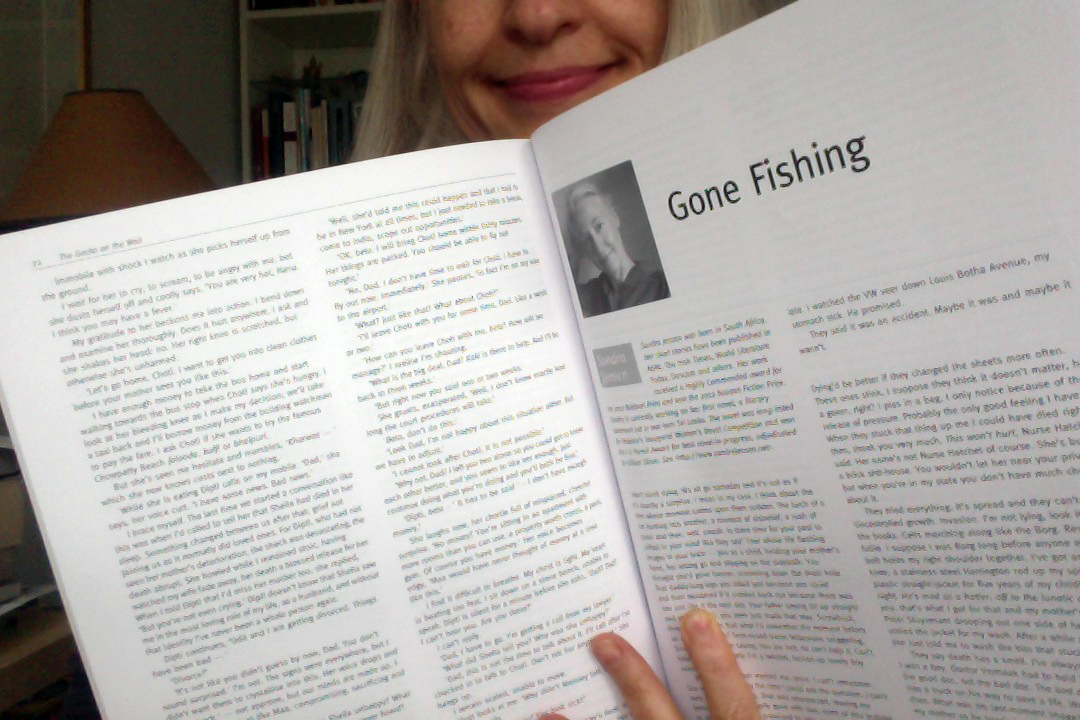
Gone Fishing in Wasafiri

Photo on 21-08-2014 at 13.57 #2

How I love the smell of a newly minted literary magazine! I am so proud to have my short story ‘Gone Fishing’ published in Wasafiri‘s 30th birthday magazine, issue 79. This issue is actually not available to the public yet, but why not join me for the launch at the special birthday event on the River Thames when Wasafiri hosts ‘Words on the Water’ a literary boat trip on Sunday 21 September. Tickets for the event include a copy of the magazine…

My short story is included in the issue’s section on New Writers. The section is introduced with the following:

“Wasafiri has a longstanding reputation for discovering ‘the best of tomorrow’s writers today’, but if we were to try and include all the authors we know to be on the cusp of great things, we wouldn’t have enough room in a whole year’s worth of issues! Instead, we have focused on just three for this thirtieth birthday issue, all of whom cross generations in their fictional pieces, a theme which  captures the essence of this issue, which looks both back and forwards. Balvinder Singh Banga touchingly presents a loving mother – son relationship which is tested by the cruellest of conditions – poverty and ignorance. Meghna Pant’s ‘The Gecko on the Wall’ skilfully depicts a man who, as a father, cannot communicate with his daughter, but who forms a bond with the next generation – his granddaughter. And ‘Gone Fishing’ by Sandra Jensen is a sensitive snapshot of a man whose troubling present is contained within the tragedy of his family’s past. Together these stories are a powerful reminder of how the present is shaped by the past, which also shapes the future. And, most importantly, they are told by three writers whose literary futures look very bright indeed.”

Photo on 21-08-2014 at 13.57


Photographs from the 13th International Conference on the Short Story in English

P1010296I loved the 13th International Conference on the Short Story in English that was held 2 years ago in Little Rock, but I have to say this year’s conference was very special. I suspect the reason for this is that the organisers decided to invite twice as many authors as they did in Little Rock. There was a downside: many more panels and readings, and so also many conflicts.  It was impossible to go to all the events I wanted to go to, but I had a spectacular time. I thank everyone involved in this inspiring conference, particularly Sylvia Petter,  Dr Susan Lohafer and of course Dr. Maurice A. Lee.

I was particularly delighted to re-connect with writers I’d met in Little Rock, and to meet so many new writers and academics in the field of writing, men and women I feel are now part of my extended family. There are too many to name, but here are a few….  Adnan Mahmutovic, Lauren B. Davis, Vanessa Gebbie,Robert Olen Butler and Kelly Lee Butler,  Nuala Ni Chonchuir, Tania HershmanRebekah Clarkson, Valerie SirrThomas E. KennedyBharati Mukherjee, Velma Pollard, Nancy Fruend, Paul McVeighRhoda Greaves, , Dr Suzanne Scafe, Anna Solding and so, so many others.

The 14th International Conference on the Short Story in English will be held in Shanghai, China, 13 – 16 July 2016. See you there!

This slideshow requires JavaScript.

13th International Conference on the Short Story in English

I can’t believe that it’s less than a month before the 13th International Conference on the Short Story in English in Vienna, Austria. Very exciting!

The theme is “Unbraiding the Short Story”.

Screen Shot 2014-06-17 at 17.14.24

This conference will bring writers of fiction in English (Irish, British, American, Canadian, Australian, Caribbean, South-African, Indian, Sri Lankan, Indonesian, etc.) and writers who have had (or will have for this event) their work translated into English together with scholars of the short story, and all will join in reading sessions, roundtable discussions and panels, including ones devoted to translation.

The 13th International Conference on the Short Story in English will also host a number of sessions, both in the more traditional format (with presentation of papers) and in other formats involving performance, dance, art, films, etc., having in mind that the form of the short story is not necessarily confined to the limits of the written page but may open up to manifold fields of expression.

You can download the program of events from the website.

On Wednesday July 16,  I’ll be reading one of my short stories, and on Thursday July 17th I’m on an extended length panel with Robert Olen Butler, Farhat Iftekharrudin and Billie Travalini. The subject of the panel is Liminality in the Threshold Story, moderated by Alice Clark from the University of Nantes.

There are a number of talks and workshops, and the guest author line-up includes Clark Blaise, Bharati Mukherjee, Tania Hershman, Vanessa Gebbie, Nuala Ní Chonchúir amongst many others, so I hope to see you there!

Introduction to Prose Fiction and Creative Writing

Unthank Logo V2Organised by the wonderful Unthank School, I am leading a ten week course in Brighton, two hours every Sunday afternoon, starting April 6th. The course is for those new to creative writing or who are looking for encouragement to continue.

The focus will be to stop thinking about writing and to actually write. Whether you want to write fiction, memoir or creative non-fiction, the course will support you to write through whatever fear and uncertainty you might have, without preconceived ideas about what or how you should write. Whether you write from personal life, intuition or imagination, you will be guided to step out of your own way and open up your ‘child eyes’ to whatever wants to be expressed on the page.

The weekly sessions will include practical exercises, readings and discussion. You will be gently encouraged to finish at least one complete piece by the end of the course.

***FAQs about the course on Unthank School blog.

Time: Sundays, starting April 6th, 2014, 2 – 5 p.m.
Venue
: Tree of Life Centre 143-145 Portland Road, Brighton & Hove, BN3 5QJ
Cost: £200 – pre-booking essential, group size is limited to 12
To register or ask any questions, please email registration@unthankschool.com or myself at sandra@sandrajensen.net

“A writer is not so much someone who has something to say as he is someone who has found a process that will bring about new things he would not have thought of if he had not started to say them.”
~William Stafford

SandraJensenPortraitAug2012_f


Want to Write? Need to Write? Here’s How…

zuidkustI have said before that if it were not for Barbara Turner-Vesselago’s Freefall Writing I would not be writing. I’d probably be wanting to write, hoping still, that one day, I’d get down to it, dabbling here and there but never really feeling connected to what writing meant for me, what I even wanted to write about, let alone how to do it in any sustained fashion.

Oostindische kers en dadelpalmFreefall is what changed things for me: literally, overnight. Yes I’ve struggled, I still struggle, with writing, but as I look back over the years and the stories I’ve written, the novel I’m working on, I know that I am on the right path, that there is always light at the end of the tunnel. And that this path has everything to do with the Freefall approach and Barbara’s sensitive, perceptive and supportive guidance.

One year I did two of her week-long workshops almost back to back, and wrote a short story every morning. Yes, these stories needed editing and more work before they were ready to be submitted for publication, but essentially I was able to let flow because of the extraordinary process of Barbara’s Freefall and the safe, encouraging and deeply creative environment that occurs in her workshops.

Whether you are a beginning writer looking for a way to start, or an experienced writer needing space and encouragement to create new work, I cannot recommend these retreats too highly.

Monte Rose_500x293There is a very exciting opportunity to experience Freefall this spring with Barbara in a very beautiful retreat centre in Barrao de Sao Joao on the Algarve in Portugal at the Monte Rosa Retreat Centre.

As it says in the schedule page of the Freefall website: “Here, in beautifully tended surroundings close to the sea, you will quickly experience the permanent shift in your relationship to writing that Freefall Workshops are known for.”

As far as I’m concerned, this is an opportunity not to be missed.

monte clerigo voor moorweb

The dates are April 7 – April 13, 2014, and the cost is  $1495 CDN. (€1032). This includes tuition, all meals, private accommodation and administration costs. In this particular Freefall retreat it’s possible to come early or stay late to explore the area, and also to bring a partner (€45 extra per night). Contact Vicki Pinkerton for details and to book a space (the groups are small so if you are interested, contact her very soon!), and if you’d like to know more about my own experience with Freefall, please let me know.

This slideshow requires JavaScript.

Of Dublin and Other Fictions – Guest Post by Nuala Ní Chonchúir

Of Dublin coverI had the pleasure of meeting Nuala Ní Chonchúir last year at the 12th International Conference on the Short Story in English in Little Rock, Arkansas.

For me, meeting Nuala and listening to her reading her story, Cri de Couer (from her collection Mother America) was one of the highlights of the conference (part of the story was a song, which she sang so beautifully it brought tears to my eyes). I’d already read Nude, her collection of sensual and poetic short stories set in exotic locations – Paris, Delhi, Barcelona (what more could you ask for?) and knew she was an extraordinary writer, but it’s always a treat when the writer is as wonderful as the writing.

Nuala’s new chapbook of short-short stories (or ‘flash fiction’) Of Dublin and Other Fictions has just been published by Tower Press and she’s doing a ‘virtual tour’ this month to spread the word. I am the lucky host of stop number four, and for this stop we are publishing Fish, one of the pieces from the chapbook (and one of my favourites), and afterwards Nuala will talk a little about its genesis.

Fish
Nuala Ní Chonchúir

 When you have seen your neighbour in the raw – and he has seen you seeing him – it cannot be undone.

You looked from your box-room window down into Nicholas’s garden but you didn’t expect to see him standing on his puddled clothes, all chest-fuzz and stomach and genitals.

He stood, looking down at his shirt, jeans and boxers, then he lifted his eyes straight up to yours. Fuck. He swiped his hands together, looked at his palms and picked at them – pulling off fish-scales, you guessed.

Half an hour earlier you had driven out of your estate, down the road, past the shops and onto the roundabout. There you saw Nicholas’s lorry, on its side, spilling a sea of fish onto the tarmac. The fish were grey and doll-eyed and the road was completely blocked. Nicholas stood there among them, like a man from the Bible, with his hands outstretched. Some motorists were out of their cars, hanging around, watching. A taxi-driver shouted at Nicholas, ‘What the fuck?’, then he got back into his cab and sulked. Nicholas threw himself onto the pile of fish and wailed. Then, he got up and walked away.

You followed him in your car, off the roundabout, past the shops, up the road and into your estate, keeping to a near-impossible 20 km per hour. Nicholas opened his front door and slammed it hard behind him. Slipping up your own stairs, you went into the box-room and looked down into his garden. He had already stripped and you were full-frame in the window; his head lifted and you couldn’t move. You saw his naked body and what 53 years had made of it. And he saw you seeing him.

So, you slipped your dress over your head, unhooked your bra and wiggled out of your knickers. And then Nicholas saw what 47 years had made of you – your skin, breasts and belly – and none of it could be undone. So you both smiled.

(First published by TheNewerYork here: http://theneweryork.com/fish/)

*

Nuala Ní Chonchúir 2013Nuala says: Flash come to me in different ways and, normally, I find it hard to write to order. Generally my flash stories spring from a first line that swirls in my head and that line may have been prompted by something I have seen, or heard, or have been mulling over.

I wrote this piece in one go – in a sense ‘to order’. In 2011, a magazine (maybe The Stinging Fly?) was looking for people to write short-shorts on one particular day, and this was what emerged for me.

‘Fish’ is set in Rahoon in Galway, on the housing estate where I bought my first house in 1999.  Rahoon is grey and gritty, but it’s near the city centre and the sea. Anyway, not once but twice while I lived there, I saw a lorry overturned on the roundabout and both times the lorries had spilled a load of fish. So the image of fish blocking the road was wedged into my head for probably 12 years before I wrote about it.

For some reason the day I sat down to write, it was that image that sprang up and I built a very simple narrative around it. I don’t plan stories before I write them so the pair of naked neighbours just happened and seemed fitting. The story was rejected a few times before being published by the quirky and wonderful The NewerYork.


*

Information on how to buy Of Dublin and Other Fictions : http://towerpresspublishing.wordpress.com/2013/10/05/of-dublin-and-other-fictions-tower-press-2013-nuala-ni-chonchuir/

Find Nuala online:
http://www.facebook.com/nichonchuirnuala
www.nualanichonchuir.com
http://womenrulewriter.blogspot.com/

Biography:
Nuala Ní Chonchúir lives in Galway. Her fourth short story collection Mother America was published by New Island in 2012. A chapbook of short-short stories Of Dublin and Other Fictions is just out in the US and Nuala’s second novel The Closet of Savage Mementos will be published in spring 2014 by New Island.