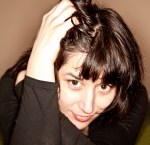
 Astrid Lowe is a writer I met through Ether Books. She did such a wonderful interview with me, I thought it would be interesting to find out more about her and her own work. Astrid is studying creative writing at the Open University. Her short story Back Then has been published in Body Parts & Coal Dust, an anthology by winners of The Whittaker Prize 2010 in Literature & Fiction, and several of her stories have been published by Ether Books.
Astrid, perhaps we can talk a little about how you got started as a writer?
As a child, I loved stories so much, I never wanted them to stop. My grandmother used to read Pinocchio to me and hope for a nap once she’d turned the last page. But I begged her to read it over and over again. I asked my mother what one or the other letter was in books. Until the day I sat in my tiny ‘grandmother chair’, reading for my friends. I wrote my first letter, in capitals, and my uncle wrote back, in capitals. That was before school. At school, they said I wrote good stories. One was about the same walnut tree from my story Slaughter Day, of which I posted fragments on my blog. But… I liked many things. I liked both literature and maths, so became an engineer. It fitted into the political context back then: you needed a ‘proper’ job. Writers were some sort of wonderful, remote creatures. My writing remained in my letters again, long letters to friends. And a dream emerged: one day, once I’d have gathered all that life experience, I was going to write ‘for real’. One of the things I said I’ll do when I grow up. A few years ago, strange as it felt to accept, I realised that I had grown up. I thought about life, and that it might not be forever. I wanted to create something. And realised that the present was as good as any to make a start. I meant to write memoir, but somehow got drawn into fiction – more freedom to play.
I was really interested to read that you come from a multi-lingual family. I’m curious how this affects your writing. Do you only write in English?
The short stories I write at the moment are all in English. Sometimes I’m sad about it, because I’d like my parents to read them too. But I’m focusing on one language for now, while I’m working on other aspects. After all, I live in the UK and most people likely to read my work are English speakers. But I don’t exclude writing in German or Romanian one day, maybe like Milan Kundera wrote in Czech and French. Or even produce an original mix? I enjoyed the language in Anthony Burgess’ A Clockwork Orange. It reminded me of the way we used to mix words at school (I went to a German school in Romania). I’m also contemplating literary translations. Would welcome thoughts on this…
The multi-lingual aspect has a bigger impact on the actual process of writing, I think. Being multi-lingual is a blessing and a curse: you can come and go as you please, but your home is no-man’s-land. I don’t think in a language. My thoughts are images, impressions, expressions, and, at the interface with the world (the keyboard I type on) they emerge as words, in the language I decide to write in. Sometimes I catch one emerging in another language – not because I don’t know it in English, but because it describes more accurately what I meant to express. There can be slight nuances between equivalent words in different languages. Also, my choice of words and my expressions in one language are always impacted by knowing the others. For example, Romanians use quite a poetic language in everyday speech, which can result in quite a quirky style when applied to English. In any case, I never found it hard to write. Somebody once said to me, ‘This must be very difficult for you, with English not being your native language.’ It’s not. When I have something to say, I find a way to say it.
I’ve read two of your stories, Back Then and In Time. I found these stories compelling and atmospheric. In Time is about a street kid in 90s Romania, and the description of his struggles is deeply moving. I’d love to know how you got the idea for this story, and what it was like to actually write it.
 ‘In Time’ might never have made it back out of the drawer, if it wasn’t for a good friend who encouraged me to send it to the Slingink competition. It was successful, but… I hadn’t wanted to write that story. I hadn’t wanted to write about street kids. The image of that naked street kid I’d seen on the Bucharest metro in the middle of winter had stayed with me ever since. I’m sad that Romania is often heard about for the wrong reasons, for the misery side. It’s more than a country with kids on the street. Always has been. For a long time, I avoided touching on the topic. It didn’t feel fair, it felt like sensation-seeking, milking misery. And sometimes it’s simply hard to write about things that are too close to us. When I decided to write it after all, I thought, ‘Fine, I’ll give you what you want.’, and poured all my bitterness into it. Like when you have to admit that something you love is far from perfect. It’s hard. It’s hard to love it, but you still do.
On your website you say you sometimes draw on your experiences of living in communist Romania, and both these stories are set there. Can you tell us more about what inspires you, what kinds of stories you like to write?
I get inspired by the good and the bad in people. Beauty in ugliness. I want to write stories that make you laugh and cry – if possible, both in the same story. I like to play with metaphors and give readers the option to find a deeper meaning. Like in films directed by Emir Kusturica. I like his colourful (rather than black and white) characters and the way he portrays ‘our’ part of the world, the misery, with tenderness. I’d also like to give readers a glimpse of Romania the way I saw it.
A while ago, during last year’s Open University writing course, another student from my online peer group asked the question ‘Can you talk about the regime or is it too painful?’ It took me by surprise. I realised that to me it wasn’t ‘the regime’, it was my childhood. I e-mailed back with examples from a regime-tinted, but happy childhood. They just poured out. Realising that I was taking up airtime from our writing work with personal chit-chat, I put in the subject line of my email, ‘This is not a piece of writing’. Emails came back saying if this wasn’t then what was. I counted the words and I’d written 1,500 of them – a typical example of why I consider letters when I talk about my writing. My peers encouraged me to develop this piece. I probably will.
I’d love to know more about the course you are doing, the Diploma in Literature and Creative Writing with the Open University. What made you choose this course, and how do you feel you are benefiting? Any suggestions for others looking to study creative writing?
 I thought I could go it on my own. Some years ago, Linda Anderson’s Creative Writing arrived at my doorstep, in Amazon packaging. It’s nicknamed The Big Red Book (BRB) by those who are working with it at the Open University, where it’s the workbook for the first course within the Diploma in Literature and Creative Writing. Solid, shiny and red, my favourite colour. But I got sidetracked by life and the BRB remained untouched. Stories of Romania remained paragraphs in emails to friends, some of whom began to give me examples of others’ successful work inspired by their home countries. A year later, on an impulse, I submitted my application for A215. I’d just completed my psychology degree with them, so the OU weren’t strangers. I told my tutor I was there for a kick in the backside to get on with it. Deadlines and peers I’d spotted on our online forums (with some of whom I still work) kept me on track through the much needed journey through the workbook. It’s a safe place to experiment, to make mistakes. A safe place to learn. One of the assignments even guides through researching publications and submitting work. I felt motivated to explore other materials about writing, subscribe to magazines and enter competitions. Tutor contact is minimal, but can make a difference. My tutor’s final comment was that my writing had been one of the most memorable in the several presentations he’d had of the course. He built up my confidence and gave me tips on where to go from there.
My suggestions to others looking to study creative writing? Be clear why you want it and be clear what you want from it. Research what’s out there and research the course you’re focusing on. Talk to others who studied and talk to those who haven’t. Take it all with a pinch of salt. Go with your instinct if need be. If you do go for courses, keep in mind they’re not ‘the world’s bellybutton’ (Romanian expression). Use them to complete you – as a catalyst, as inspiration. And leave behind what’s not useful.
I’m always interested in process. Do you write every day? Do you polish each sentence as you go along or do you edit after the first draft is written? Do you have any rituals or activities that help you get in the mood to write?
Most of what I write I qualify as creative writing. In my world, there’s hardly a day without writing. I keep in touch with friends from all over the world (and from around the corner) through letters and e-mails. Snippets of these could inspire or be part of a story. I’ve started a diary with extracts from my letters, counting up to about 50,000 words every three months. I don’t write ‘formally’ every day (stories, for example), but I would if I were a full–time writer. I’m naughty with rules of writing – I know of many and follow few. My biggest sin is polishing too early and judging my writing as I go along. Giving myself a hard time, I mean. I’d like to do less of that, but have decided not to give myself a hard time about giving myself a hard time… I’m hoping to grow into it eventually.
Strangely, what often gets me in the mood to write is reading technical advice about writing: I might even follow it, but mostly it gets me ‘into the zone’ and suddenly something that was only a faint idea before begins to take shape. I often find myself very inspired by brainstorms with my parents, about past Romania. Other times, it’s an emotion: I’ve just seen a hedgehog curl up in the middle of the road and heard a car around the corner: thoughts come pouring in and ideas I had before join together. Other times it’s an empty brain: I walk around a field with my attention skipping from birdsong to airplane, and suddenly I start making notes on my iPhone. Many of my stories so far resulted from homework I’d given to my subconscious to work on till I was ready to type.
 Are you influenced by any authors?
Definitely. But not consciously at the moment. I think what I read leaves a little programming behind in my brain, on what to do or not to do. I try to read all sorts, often on recommendation, curious what others like. My only condition is that it holds my attention.
What are your aspirations as a writer? How do you see yourself in ten years time?
I used to say goals are for boys. I don’t play football. I’ve always been carried by the current and liked to keep my options open, seize opportunities, try new things. I’m a self-employed therapist now, but it suited me to work as a project manager. I like to bring together all I am and all I can be. Perhaps this is why I feel that writing is like arriving somewhere I want to be. I’d like to earn the privilege to stay, by creating work that touches readers.
The following of Astrid’s short stories are available from Ether Books:
Back Then, Make a Wish, In Time and Snails
Astrid’s website: http://word-weaver.co.uk

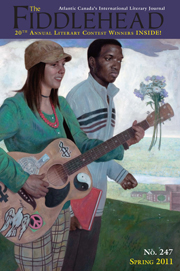 My short story, Mihalis and the Mermaid, received an honourable mention for the Canadian literary magazine Fiddlehead’s 20th Annual Best Short Fiction Competition. There is only one first place, and two honourable mentions. You can purchase the issue here. I believe in supporting literary magazines and small presses, so please do buy the issue if you are interested in reading the story.




 Sandra Jensen