My Late-Stage Lyme Diagnosis

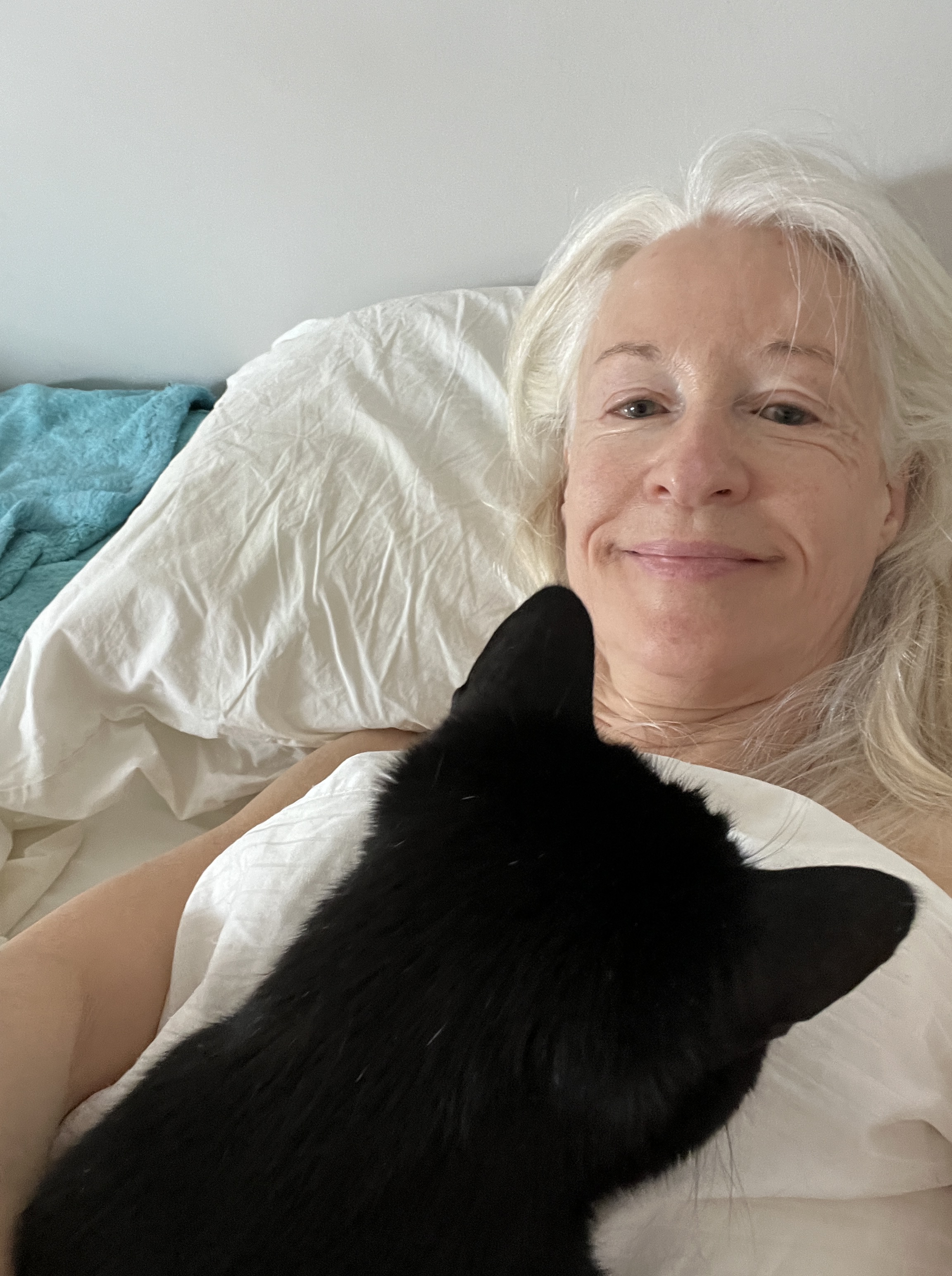
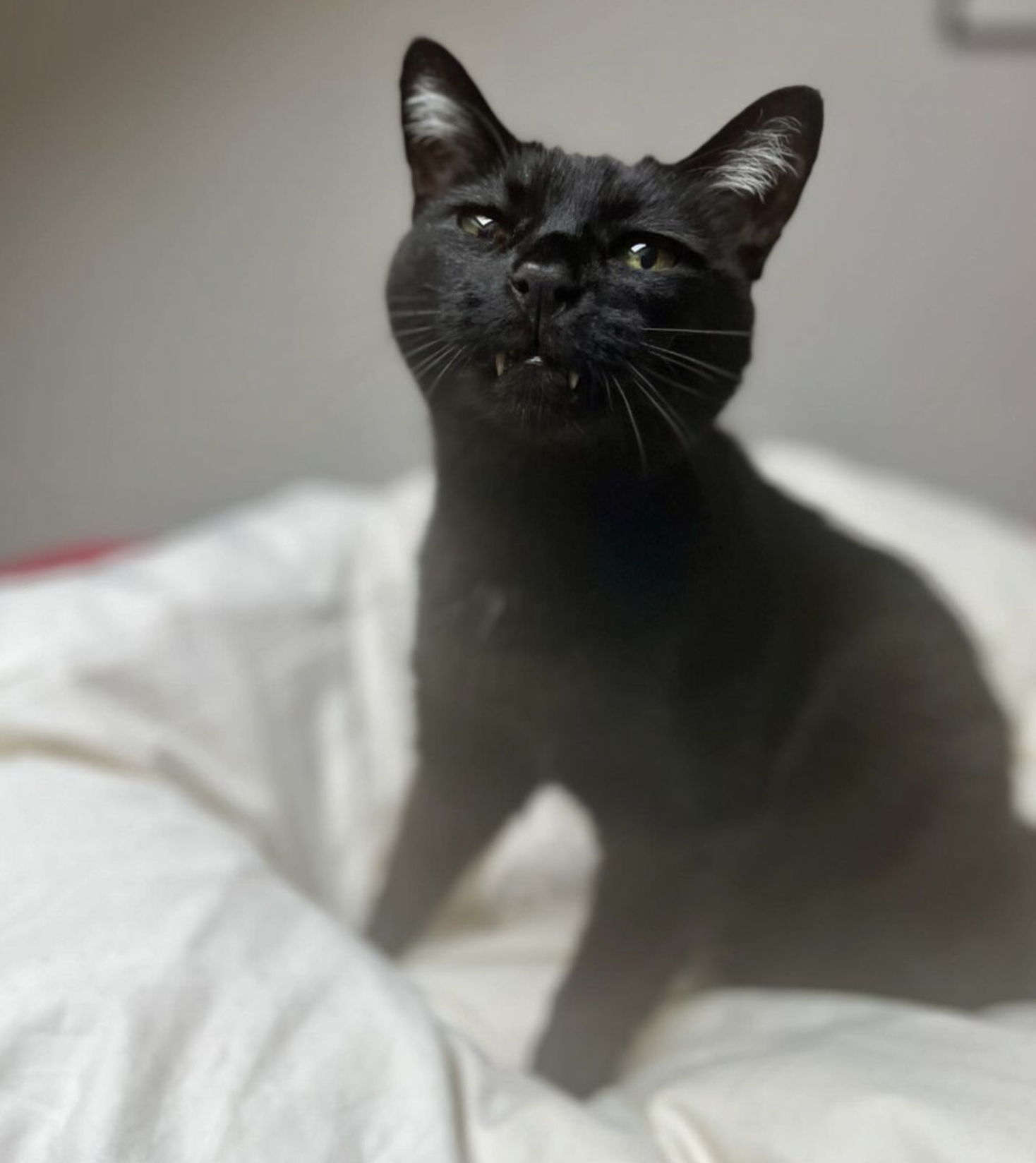
Sandra's black cat, Ronan, sitting on  a white duvet

I wanted to write a little more about this other than my brief Facebook post, which I had so many kind responses to.

What feels important to say is that it’s my understanding that there isn’t really a fool-proof test for this, particularly since I’ve probably had it for 30 years.

I had, in fact, expected a diagnosis of chronic Rickettsial disease, not Lyme. Rickettsiosis is similar to Lyme – I contracted South African Tick Bite Fever a few months prior to the onset of typical chronic fatigue symptoms. I did go to the London Hospital of Tropical diseases and show them my bull’s eye rash, but they sent me away saying I’d get better. I didn’t really put two and two together until some time later – years in fact, and I did try to treat whatever was going on for me alternatively, but with no real change.

The recent diagnosis of Lyme was made by the private practitioner Dr. Ben Sinclair on the basis of a few things, my symptoms of course, and in terms of blood testing my extremely low NK (killer cell) count for dealing with bacteria, a borderline Borrelia (a bacteria that can cause lyme) iSpot, and some anomalies in the size of my red blood cells and the amount of hemoglobin in the cells (high mean cell volume and low mean cell hemoglobin content, indicating potential inflammation or intracellular bacteria).

It does at the very least explain the many acute and chronic bacterial infections I’ve had over the years. What is good is that I did not test positive for co-infections, which are very common with tick-borne illnesses, and my NK cells for dealing with viruses are, apparently, doing their job.

I am very much aware that an antibiotic protocol has potential problems, and doesn’t necessarily ‘cure’ someone with Lyme. This is especially if you’ve had it a long time. I read recently that the longer a chronic health condition lasts, the more likely other conditions accrue. I believe this is true. I also think multiple factors are usually behind a chronic illness, from trauma to DNA to a pathogen, and lifestyle factors. (I would say all three are involved in my own illness.) Or, you can have an initial positive response to antibiotics, and then the symptoms return, and further antibiotics are needed – or they simply don’t help in the long run.

As some of you know, there are two reasons I decided to work with a private consultant versed in tick-borne illnesses, and to treat with antibiotics: Meghan O’Rourke’s book The Invisible Kingdom: Reimagining Chronic Illness, which charts her own multiple health issues and journey trying to find answers, and her positive experience with antibiotics, as well as the fact that earlier this year after three weeks of some unknown illness, I responded immediately to Doxycycline. In the past I’ve worked with at least two alternative practitioners who used herbal protocols that included treating tick-borne issues, but as I mentioned, without any noticeable results. Possibly the same will happen after 16 weeks of three different kinds of antibiotics (Dr. Sinclair’s protocol, and common in the US and Germany). But given I have pretty much tried everything else, and I’m only getting worse, not better, I thought it was worth a try. Perhaps it will relieve at least some of my symptoms, which would be amazing! I realise I will need to pay special attention to the gut microbiome. (Meghan O’Rourke did Faecal Microbiota Transplantation treatment here in the UK at the Taymount Clinic, but this is very costly.) I do already make sure I eat prebiotic/probiotic encouraging foods (and supplements).

Mostly I wanted to write this to help me manage my own expectations, and to outline a little about the ‘story’ – that it wasn’t a shock to get the diagnosis, in fact initially it felt good, to have something specific as I was never even sure I (still?) had Rickettsial disease. And, like most people diagnosed with ME/CFS my regular blood tests are nearly always ‘normal’ and this is frustrating when I have so many debilitating symptoms that leave me largely house-bound and often bed-bound. So to actually see on paper that I do have issues with my immune system – and probably have done so for a long time, it’s a weird kind of relief! And, to be honest I am finding the whole process quite stressful. The basic costs involved are high and many of you have already generously donated to help me get to the point of diagnosis. I will need to get the antibiotics, which have very specific timeline/dosages, and organise three follow up consultations with Dr. Sinclair during the course to ensure I’m doing okay, plus another blood test from Germany once I’ve completed the protocol.

I’m hoping I can get the antibiotics prescribed by my own GP but she’s not available until mid December. Please send good will wishes that she can prescribe and is amenable to the approach! Otherwise I will have to get them privately. Once I have a clearer idea I’ll update my fundraiser.

Thanks as always for your support, for reading this far if you’ve managed!
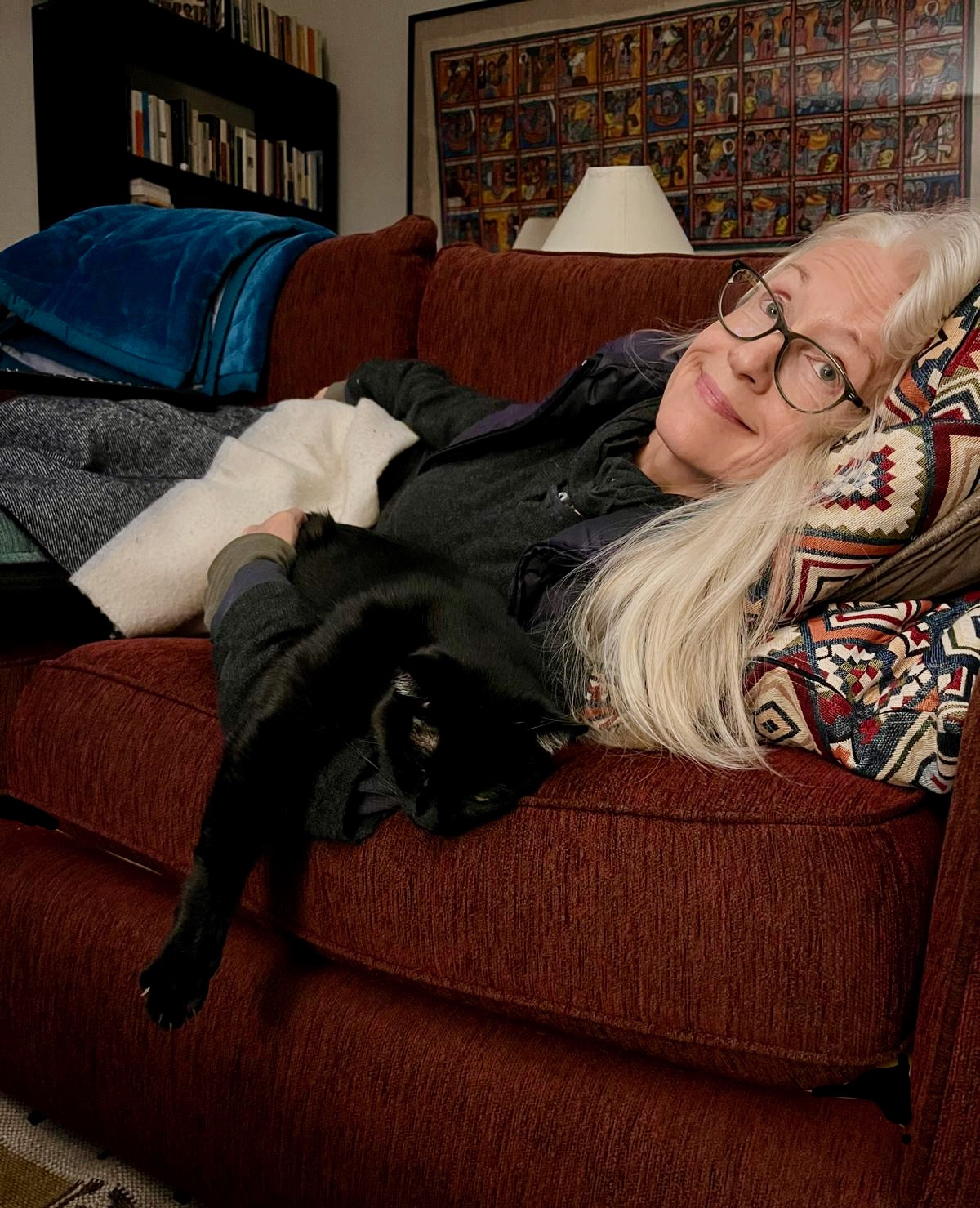
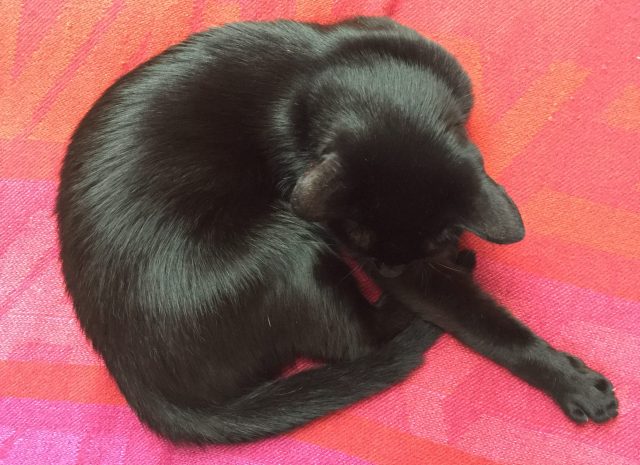
Sandra lying on a couch with her black cat Ronan

Photo by David Crean

Previous blogs of mine on my physical situation:
The Art of Illness: Part Two
The Art of Illness
Finding Home
Doctor, Doctor
44 Weeks
Still Suffering
ROCKS AND FLOWERS
Feeling Normal
The Real Story
The Unendurable, Part Two
The Unendurable
IT’S NOT COVID
More Things I Don’t Want To Talk About
On Being Invisible
THE ART OF ILLNESS: PART TWO

For some reason I cannot post an update to my Fundrazr Can you support my journey to physical recovery? So I emailed everyone who donated, and am going to post a version of what I emailed, as so many lovely people have reached to see how I am doing. (If you are stumbling across this blog and don’t know the ‘story’ (and want to!) have a look at The Art of Illness.)

I just had my first consultation with Dr. Ben Sinclair, which is what the fundraiser was for, two consultations with him. Oh I wish all Doctors were like Dr. Sinclair. Prior to the session I had completed several pages of questions regarding my health history and so on, which he had read through prior to the meeting (Google Meets). Dr. Sinclair was very thorough, and my take was he had an excellent, intelligent and multi-disciplinary approach, taking in all the complicated aspects of my story. As I also suspect, I most likely have both viral and bacterial issues, plus damaged autonomic nervous system / dysregulated immune system, from both trauma and pathogens (including EBV, HSV, mycoplasma pneumonia, tick-borne disease etc). He listened really well, was articulate and positive, and I felt had a clear understanding of the many issues I have/have had. He himself had Long Covid and had such poor treatment on the NHS, which is why he started his own private practice with a small team behind him including Dr Carsten Nicolaus who specialises in Lyme, tick-borne diseases and associated health conditions.

Dr. Sinclair came up with a plan for me:

First off I need to do some blood tests on immune function, vector borne diseases and so on. Some of these I might be able to have paid for on the NHS, others will have to be done privately. I won’t know for a week or so as I’ll be filling out further forms and discussing with my own NHS GP what she can get done. I am hoping I have enough from what was raised to at least cover the blood tests, but I’m not sure at this point.

Once the tests are done, I will go on a trial of a month of the antiviral drug, Valacyclovir (which I know my NHS GP will be willing to prescribe, thankfully). This is something I’ve been thinking of doing for a while. Dr. Sinclair talked about ‘clearing the decks’ so to speak, before bringing out the big guns (my words!) – as it will help him decide more specifically what to use – antibiotics or alternative approaches or both. 

Dr. Sinclair said a lot of very encouraging things, including how it’s possible my activated sciatic nerve issues could be connected not so much to the prolapsed disk but to all else that is going on. I do know there are people walking around with exactly my diagnosis (pinched nerve from prolapsed disk) who have NO pain, so…. It would be miraculous if this was one of the many things that eased with his treatment programme. And, he thinks my restless leg syndrome could also be an aspect of the whole situation. It would be so amazing if this also cleared up! And, it will take time. I think we are talking about at least 6 months or more of treatment.

My health has been bad lately, including a week of such profound physical weakness I could barely open my eyelids. This is very unusual for me, it might occur for about an hour in the evening but not for a full week. I was so despairing I thought if I had the funds I’d check myself into a respite care or something similar (mostly respite care is for carers, but as I am my own carer for the most part some respite would be lovely…). Thankfully the weakness eased.

Anyway, I am eager to get started on this journey!

I’m sure most of you aren’t interested in all these details but I did want to update once I had the first consultation. 

Again, thank you all so much for reading, and for your generosity.


Previous blogs of mine on my physical situation:
The Art of Illness
Finding Home
Doctor, Doctor
44 Weeks
Still Suffering
ROCKS AND FLOWERS
Feeling Normal
The Real Story
The Unendurable, Part Two
The Unendurable
IT’S NOT COVID
More Things I Don’t Want To Talk About
On Being Invisible

THE ART OF ILLNESS

It’s been over a year since I wrote a blog about my health (the latest one being Finding Home). Mostly because not a lot changed since then, both positive and negative aspects were on an even keel – nothing drastically new, but manageable, many thanks to all the support I received from so many of you. So: better mental health, lessening of weird symptoms (burning mouth/foot syndrome, thyroid goitres etc) but still the small window of energy each day, bordered by exhaustion, still a continuous discomfort veering sometimes into pain down my sciatic nerve, still my pancreatic insufficiency for which I have to take digestive enzymes with everything I eat, still getting up in the night to wee several times, and sadly the restless legs returned when I stopped the sciatic pain medication, but if I can get my ‘bad’ leg pulled (quite literally!) before sleep, this seems to ease it so I’m sure it’s associated with my prolapsed disk. I’m also still waiting for consultations with an NHS cardiologist etc (it’s been over 2 years now…), but it’s been a while since a tachycardia episode has woken me violently in the night.

If there is an art to illness, I felt I was learning it.

I suspect one of the main skills involved in such an art is being willing to ask for help. If you’ve read my blogs you’ll know how difficult this is, was, for me, and yet doing so created a fundamental shift inside me, the beginnings of rewiring of old programming that I had to do it alone, had to be independent, strong, without needing help from others. This was what my mother modelled, and although I could see how negatively this affected her and her life, it was hard to shake myself free of the same beliefs. I was forced to, my health deteriorating so severely I more or less had no choice (see The Unendurable).

But something changed in March and once again I’m asking for help. If you’d prefer to skip to the specifics rather than my lengthy preamble, go here.

For no particular reason (that I know of), my exhaustion no longer had a window of energy and became crushing. It is 24/7. It’s affecting my eyesight, I can barely focus until late in the day (I’ve had my eyes tested, they are fine). The only times this had happened before was if I was actively ill, or after my adverse reaction to the vaccines. I was (am) still “aggressively” resting which means guided meditations lying down and an eyemask, at least twice a day – my days being shorter than most people’s as the best sleep I seem to get is in the morning, so I get up late, and my body starts to shut down around 7 pm, so the most I’m doing then is watching TV or reading.

Although this exhaustion bothered me, I decided to participate once again (and hopefully assist a little) in my partner, David Crean’s  Body Resonance Goddess retreat in the beautiful Milelja Retreat Centre near the little town of Molyvos. I was much sicker the first time (two years ago), and almost didn’t go. I’m so glad I did as it was a deeply healing experience. This time, although I continued to feel very tired, it was once again amazing. Particularly important for me was making deep connections with three beautiful women, two of them half my age (but twice as wise), connections I know will last my life. But the journey home was challenging, 19 hours of delayed flights and long drives and sitting on runways or in the air awaiting a slot.

Two days later I became profoundly ill. What I sometimes call my ‘usual’, only more severe and lasting much longer than normal: deep malaise, as if you are about to come down with a tropical illness, or a bad flu, but without any coughing or sneezing or even fever. I could sense something was ‘in’ me, something unwanted – a virus, bacteria, mycoplasma, I don’t know. Something that lives inside me and hurtles to the surface when triggered, most likely. A retained pathogen, my acupuncturist believes. Three weeks of utter grimness.

At the time I was reading The Invisible Kingdom: Reimagining Chronic Illness, a 2022 medical memoir by the poet Meghan O’Rourke. It tells the gruelling journey of her own physical health, but also delves into the social and political ramifications of chronic illness. The gaslighting, the sexism, the failures of the medical institutions. The book is extensively researched and she interviews a number of doctors and scientists. It’s not an easy read, not because it isn’t well written, it is, but because of all she suffered emotionally and physically, still suffers, and the truth she writes about how it is for those with chronic illness.

There is so much I’d like to quote from the book but the parts that struck me the most were about how so many who are ill are expected to learn something from it. We do, of course we do, but at what cost? As Meghan writes:

There is a razor-thin line between trying to find something usefully redemptive in illness and lying to ourselves about the nature of suffering. Until we mourn what is lost in illness—and until we have a medical community that takes seriously the suffering of patients—we should not celebrate what is gained in it.”

If you don’t want to buy the book, Goodreads has a good list of short extracts and quotes.

Like myself, Meghan has multiple reasons for her illness. But the thing that helped her the most, the thing that allowed her to live a relatively normal life, was treatment for Lyme disease: an intense and long-term course of antibiotics. (She followed this up with FMT in England – fecal microbiota transplant, to take care of the microbiome killing side-effect of antibiotic therapy, something I’ve known about for years as it can help those with chronic illness, but for me it’s unaffordable).

One of the factors that most likely triggered my ME/CFS was South African Tick Bite Fever (similar to Lyme, but often called Rickettsia). I’ve long thought about embarking on an antibiotic treatment, long avoided it, long wanted to try everything else. I’ve also thought about taking antivirals, which some with ME/CFS do very well on, and given it’s likely I have flare ups of Epstein Barr Virus and that I do have flare ups of HSV 2, they could help. But my impulse has always been towards alternative approaches, and even when I went to a tick-borne illness versant doctor in Germany fifteen years ago, she treated me with herbs (one year of them, after which she said I was cured and yet my health steadily deteriorated, possibly because I wasn’t properly dealing with past traumas that can also be a factor in chronic illness. I went on another tick-born illness focussed herbal protocol about six years ago – you read Finding Home you’ll see the extensive trauma therapy journey I’ve been on – and my mental health has never been better thanks to this. But I’m still ill).

Reading Meghan, and feeling so entirely awful for three weeks got me thinking. There are tests for tick-borne diseases, mostly in Germany and the US, but they are hugely expensive and not entirely conclusive. I spoke to my GP here in the UK and she told me she has a patient with a similar profile– trying everything including trauma therapy, and that the antibiotic most used for Lyme, Doxycycline, finally helped this patient. Would I like to try? I had no hesitation. YES, I said. I didn’t expect any result but within a day of taking them I no longer felt grim. The tiredness, the difficulty focussing, yes, but not grim. I’m on a week trial, to be extended another week if I’m doing alright.


A couple of days after starting the antibiotics I connected with someone in a support group for those with tick-borne illness. I’m not sure why I reached out to this particular person, perhaps because she’s both a scientist and a writer, because I liked her profile picture, her posts about solar power, about how humans and apes share a common language, her posts about cats. She hasn’t been ill for as long as I have and she initially thought it was ‘just’ Long Covid. She discovered Dr. Ben Sinclair, a private consultant who is putting together a centre of excellence focussing on hard to diagnose and treat illnesses like Long Covid and Lyme and is working with some world leading experts on these.

As I know, many with post covid infections or adverse reactions to the vaccine have reactivation of other viruses or bacteria and based on her symptoms, Dr. Sinclair treated her with both Doxycycline and antivirals (Valacyclovir). While she still has Long Covid, she is doing much better since this combined treatment, and still works with him.

Given my own GP is not a specialist in this area, given the NHS only allows for 10 minute slots if that, and given this new journey I am on is not straightforward, not without side-effects or detours or set-backs (as is clear from Meghan’s book) I strongly feel I need such a support, at least an initial consultation.

It’s not cheap, of course, but much cheaper than the blood tests I had vaguely been thinking about over the years: £299 for an initial 45-minute consultation. (The ten-day FMT Programme Meghan did in the UK costs £5175.00 but that’s not in my sights right now!).

So, yes, once again I’m asking for your help. Once again it isn’t easy, and I have no expectations. But if you can help that would be amazing. (If you’ve read this far, that’s amazing too!).

I would like help towards two consultations with Dr. Sinclair, one to start with and another to see how I’m getting along. Thankfully as I’m ancient now, prescriptions are free 😊

Here is the link to the fundraiser: Can you support my journey to physical recovery?

Thank you for reading. Thank you for being there. Thank you for the little messages I get on my Facebook and Instagram posts, it all means so much to me.


Previous blogs of mine on my physical situation:
Finding Home
Doctor, Doctor
44 Weeks
Still Suffering
ROCKS AND FLOWERS
Feeling Normal
The Real Story
The Unendurable, Part Two
The Unendurable
IT’S NOT COVID
More Things I Don’t Want To Talk About
On Being Invisible
More Things I Don’t Want To Talk About

I shared my ‘invisible illness‘ blog on Facebook, and in the comments someone suggested I had more to write on the subject. I told her writing the blog made me quite depressed, putting my health situation ‘out there’, in public. For me it seemed to concretize what was going on, to make it all the more real, all the more inescapable. And not long after writing the post – although I can’t prove a connection (there were other factors) – I had a serious CFS/M.E. relapse, putting me entirely in bed for nearly a week. It was the most serious relapse I’d had for months. Imagine having a severe tropical illness, or something like pneumonia, and you are in hospital. You are on the road to recovery, but still bed-bound. This is how such a relapse manifests for me.

I had felt something coming on for several days prior, one of my least favourite chronic symptoms rachetting up: a sensation of pressure in my head, combined with intense bi-lateral tinnitus increasing in volume from the time I wake in the morning until I go to bed, at which point it is almost unbearable. I can do nothing but listen to the clanging, a tone of a school alarm alerting you to a change of class, or the sound of a fire alarm in a public building. It is this particular tone. I’d have a digit removed if it meant this symptom could magically disappear. It started about 3 years ago, and occurs every single day. It’s worse when I’m tired or ill, but it’s always there. An alarm going off inside my skull.

What I haven’t written about my health situation is my anger. My profound despair. My hopelessness. My depression. Much of the time I ‘manage’. I’m good at managing. If my symptoms are fairly consistent and not entirely debilitating, and if I can apply some kind of routine to my day, and if, every so often I am well enough to get out to meet with a friend, I am not angry. I am not despairing. I am managing. Those emotions sit there quietly in the back waiting until I am once again thrown into incapacitation as I was last week. Then I think to myself, “I cannot carry on like this, I just cannot.” When I am so debilitated I can’t write, I cannot see friends, I can barely even read. Life doesn’t feel as if it is worth living. These are hard times.

I went through a protracted period of incapacitation about a year ago, and I realised I had to take stock. If my life was to continue like this, then what? I was at the end of my tether. I have been suicidal in my life, I have had several breakdowns, but this was not that. This was taking a good hard look at my situation. The facts. I knew I needed two things: nature, and a community. I needed to be in a place where close friends would be willing to come to me, to sit quietly perhaps, to make me a cup of tea. Or not, just to be in the house, so I can hear them chat away to themselves. The clink of cups. A kettle boiling. When I am ill it is often better for me to be alone, but I like to know there are people nearby.

Until that point I was very isolated. I had no friends in this city I’d been living in for five years (word of advice: if you have a chronic illness, are a writer, do not have a ‘job’, have no children, do not go to church, and your partner’s work takes them away for nearly six months of the year, do not move to a city where you don’t  really know anyone). It’s not that I don’t have friends, I do, several wonderful friends, but most of them do not live in the country I live in. Isolation is well documented to adversely affect health.

So, I forced myself to teach once a month (doing any kind of regular work, a normal ‘job’, has been impossible for decades, as I never know when I might be too ill to do the work).

My teaching has brought a handful of beautiful people into my life. But it’s not enough, particularly since they don’t live within walking distance.  This is what I call community. Someone next door. Someone across the way. A tiny village.

Nature is our minuscule patio filled with the sound of the industrial fans from the shop beneath us and the shop beside us. The patio is also a thoroughfare for those working in the shop below, so is never private. There are no parks near enough for me to walk to, and although the English Channel is but ten minutes away, it entails crossing a highway. This might not seem like a big deal but I am so noise sensitive (hyperacusis) going near this road actually hurts.

We need to move, not just because where we live is not conducive to my health, but also because our overheads are unsustainable. And then I worry: if we move far, to a new place, what happens to the friends I’ve managed to make here? Will I have to start over? What about the wonderful psychiatrist homeopath I am able to see nearby on the NHS? The TCM practitioner I’ve just found? There are so many other factors that make any kind of move complex and difficult, let alone the actual move itself. This is barely conceivable for me to manage.

Everything feels like a catch-22.

I have avoided talking about my anger about my illness. It’s not present right now. Anger is not an emotion I feel frequently. I can count on my two hands the times I’ve actually been enraged. I’m not suppressing anger, it’s just not there. But I am angry about my illness. I do not feel I signed up for this. I remember a friend, some years ago, telling me I did not seem like a sick person. I do not have the profile of a chronically ill person, whatever that is. Does anyone sign up to be ill? No, of course not. Also, I do not believe we are given these challenges by the universe to “teach” us something.

But we do have an opportunity to take a look at how we react to challenges, how we are ‘with’ whatever is going on. We can learn from what we are going through.

In the early years of my illness, when it manifested as bouts of acute bacterial and viral infections, I learned something: if I fought what was going on (a literal physical sensation of trying to push my body, my discomfort, away from me), it worsened the symptoms.  If I physically relaxed, and was ‘with’ what is, things eased. I did not get well, but my experience of whatever was going on improved.

Now that the progression of the illness has changed, now that each day includes long periods of discomfort, I am neither with nor against what is happening. I am simply bearing it. Even when I tell myself “I cannot bear this.” I am bearing it. I have no other choice. I will not end my life, even though sometimes it feels as if my life is ending me.

I have avoided talking about my despair. In my blog about having an invisible illness I linked to a post in the New Yorker about memoirs of disease. One of the memoirs is ‘Sick’ by Porochista Khakpour. I haven’t read it. I had come across it some time ago, and thought I should. Porochista Khakpour was finally diagnosed with chronic Lyme disease and treated with antibiotics amongst other things. A few days ago I decided to find out how she was doing. What I discovered was the thousands of dollars it took for her to be diagnosed and treated. More money than I have, far, far more. She raised much with crowd funding. I am not sure I could do this: my shame around my illness prevents me (another thing I haven’t written about). And then I learned she is still not well. By the time I finished reading all this, I could barely breathe. I don’t have the money to pay for this kind of testing or treatment. And even if I do, it may not make an iota of difference.

I was at rock-bottom. Sick, despairing, hopeless.

But at the bottom there is nowhere else to look but up. Once again, I knew I had to take stock. I had to turn my focus to the aspects of self that are not my illness.

I recently won a prize for my writing (I cannot announce the details publicly for a few weeks), and I am reminded: I am not just a sick person. I am also a writer, even if all I can do is to think about what I would like to write. I am also a friend, even if all I can do is talk to you on WhatsApp.

I am still here and the day will unfold with its challenges. I haven’t given up yet.

On Being Invisible

I recently read a lovely post on Instagram, the words of a brave young woman who had CF (cystic fibrosis), it moved me deeply to hear how this she described the challenges of her short life, as it felt so similar to my own challenges. I hesitated in commenting as I felt my health situation could not compare, but perhaps someone out there needs to read how my life is for me, and perhaps not feel so alone.

Like most children, I used to pretend I was able to make myself invisible. It seemed I was quite good at it, I could enter and leave rooms without anyone noticing, I could ensure a teacher would not choose me to answer a question.

But the kind of invisibility I am writing about now is quite different. I am seen, but not seen.

For the past 24 years have a chronic illness (variously diagnosed as M.E./CFS or CFIDs or possibly chronic Rickettsia, a lyme-type pathogen), which to the “chronically well” goes largely unnoticed. Much has been written about ‘invisible’ illnesses and the challenges of having one, and I’ll put some links below this post, but I suspect it is mostly people who either have an invisible illness, or those caring for them, who read these things. So I’m writing this in the hopes that someone stumbles here, who is unaware of how an invisible illness is experienced by someone who has it.

To most people I look fine, I sound fine. I seem to be doing things healthy people do. I don’t have a feeding tube up my nose, I don’t have to walk around with an oxygen tank, I don’t even have an inhaler. I don’t have a terrible skin affliction. I have all my hair. In fact I am lucky to have a lot of hair. I am rarely pale. I walk at a normal pace, for the most part, although this is generally because I’m trying to keep up with a chronically well person, I hate to be a drag. My illness is so invisible, that even when I tell someone, I feel really dreadful, they carry on treating me as if I am feeling perfectly fine.

Actually, this is often my preference: to be treated as if I am as healthy as I seem. My illness is a boring subject for me, having had it now for so long.

In spite of finding my health issues tedious to dwell upon, just sometimes, I’d like someone to know, to really know what it is like to live in my body. There are a few people who have a good idea – usually those with a similar illness or the loved ones of those with a similar illness. I also do not want to be pitied, or to have people give me that Oh you poor thing look.

Generally I try to keep my health situation to myself. Illness is like death and grief. For the most part, people don’t want to have anything to do with it, and if I do talk about it, instead of simply asking, Tell me how are you affected by this, I’d like to know, most pull their eyebrows together and frown sadly, which is meant to look sympathetic but really is a kind of defence. I know, because I’m guilty of doing this myself. I also had one friend who would do everything she could to hear me say, Things are good before she would continue her conversation with me, or she would somehow find something in what I said to prove to her that I was doing better, that all was fine, and tell me so.

Or, people carry on as if the illness (or the grief) simply doesn’t exist. Being on the receiving end of these approaches is challenging. I may be chronically ill, but I am also so very many other things, and, I am often feeling really awful, in spite of appearances, and it helps me to have all of my ‘selves’ included in a friendship.

If you lived with me, my illness would not be invisible. You would see that just two hours after getting up in the morning, I am forced to go back to bed for an hour or so (on a good day). You would see me do some work for perhaps three or four hours at most, and then you would see me spend the rest of my day mostly lying prone. You might see me out and about, doing reasonably well, and then suddenly crashing, and then you’d see me desperate that I cannot be at home, in bed, instantaneously. You would see me leave the house in the evening for my weekly ukulele class, and you would know what an enormous undertaking it is for me. I haven’t taken a class in anything for years because I just felt too awful. I still feel too awful (in fact I’ve gotten progressively sicker over the years) but now I’d rather be taking the class than not.

If you lived with me, you would see that my symptoms usually increase over the course of the day, so that by the time I go to bed, I’m entirely overwhelmed by them and can barely think or speak. If you lived with me, you would know that a mumble means Night night, I love you.

The disease has changed for me over the years, there was a time when I would in fact a few weeks of relative health, and then severe viral or bacterial infections of some kind. But now, it is a daily experience of navigating relative levels of discomfort.

I am chronically ill and yet I attend to my writing, I attend to my animal rescue work, my friendships, my family, and I attend to my teaching commitments – all done in those few daily ‘useable’ hours. I can’t say I attend very well to these things, but I try.

I even manage to travel, and to participate in some events that demand a great deal of me, and I’ll seem just fine. I might even be just fine. Until I get home, and then, usually, I will get so ill I have no useable hours at all for a few days, or even a few weeks.

This is how it has been for years. You might suggest that I don’t do anything in those few hours, I should experiment with resting the entire day, or that I don’t go on trips. The thing is, I have spent so very many entire days in bed and I want a ‘normal’ life, and so those useable hours, those trips, are precious to me, they make me feel as if I too am a chronically well person, if only for a little while.

There are other interesting challenges associated with this ‘invisible’ illness ( although for some people it is not so invisible, many with M.E. / CFS are bed-ridden or have to use a wheel-chair). One is the name ‘Chronic Fatigue’. Most people will imagine how it is when they are tired. But Chronic Fatigue is not ‘fatigue’, it is not tiredness, it isn’t even exhaustion. It is frequently the severe, all-encompassing, crushing weakness and aching one might have with a serious flu or tropical illness. And then there is the multitude of other symptoms that would fill an entire blog post.

And then there is the unasked for advice. I understand this impulse, I have it myself – to try and ‘fix’ whatever it is that is wrong in someone else’s life. I’d much rather be listened to than given advice, I am a font of advice for myself, I don’t need anyone else to give it to me, unless you have a similar heath issue as myself, and have genuinely found something that has helped you or something you truly think worth trying. However, one of the main ‘problems’ with M.E. /CFS is that no two people have the same set of symptoms, and what ‘works’ for one person may not work for another.

M.E./ CFS is not a considered a terminal diagnosis, yet ME/CFS patients are at increased risk of all causes of mortality, especially suicide. Few people know this. In fact, no-one really knows what M.E. is. My own GP admitted: “It’s a name for something we don’t know what it is, and we don’t know what to do about it.” Personally I think these chronic illnesses are often the result of a kind of ‘cocktail’ – a pathogen and trauma. I’ve tried everything from Mexican Shamans to immunologists, but to no avail. So I try to carry on with my life.

Recently I had brief brush with a frightening, and often terminal disease: cancer. After a few terrible hours writhing in pain in A&E on a Saturday night, a mass was found in my pelvic area, and thought to be a suspicious ovarian cyst. I was fast-tracked for further investigations and then scheduled for an operation to remove both ovaries and fallopian tubes, the cyst to be sent for analysis. For 6 weeks I lived in a new dimension: a dimension where what I had was not chronic, but acute, possibly life-threatening. I cannot say it felt good to be able to tell people of my ‘new’ health situation, but it certainly felt different: everyone was well-informed about cancer and the potential ramifications. I had little explaining to do, and a lot of wonderful support. I no longer felt I was moving through the sludgy, invisible world of my chronic illness, instead everything became pin-sharp and bright – interwoven with a great deal of fear. I was afraid about the cyst, and about the operation. It was my first.

M.E. / CFS does not make me afraid, but it does make me feel extremely limited. I feel the illness has taken away much of my adult life. I realise this is a negative view, and that perhaps I have also learned much because of the illness. I have learned compassion, at least, for those who are in a similar situation.

The operation was not only a success, but miraculously they found no cyst, and only one fallopian tube was removed as it was severely twisted. On hearing this I felt so grateful, so very alive. I try to remember these feelings as I return to my ‘normal’, invisible illness. And that in spite of all, I am here, I am alive, and I am well enough to be writing this, for this I am truly thankful.

Some more information on this subject:

Six Common Misconceptions about the Chronically Ill

What is Invisible Illness? (+ How to Explain it to Others)

17 Things Healthy People Need to Hear During Invisible Illness Awareness Week

Invisible Disabilities Association
But You LOOK Good 
One of many informative pamphlets produced by the above association

The Challenges of Living with Invisible Pain or Illness

Also well worth reading: New York Times article by Lidija Haas on “Memoirs of Disease and Disbelief


On Loneliness

You know you are in trouble when you find yourself welling up after a friendly encounter with the phlebotomist.

She inserted the needle, asked me how my weekend had gone. I was lost for words – I couldn’t even remember when the weekend was let alone how it had gone. She made a commiserating sound, a little ‘Ah’. And then, don’t ask me how, we found ourselves talking about how we hated cleaning. I told her of a long-ago job as a house-cleaner, how I was very good at making a house look tidy, books patted into place, vases placed just so, a chair shifted slightly… but dust and grime remained in great swathes if you looked close enough. ‘So,’ she said, ‘You were one of those cleaners,’ and we laughed.

I left the office, and that’s when my eyes welled up. It had been days since I had a conversation with someone that wasn’t via text or Skype or cell phone.

I’ve lived a remarkably solitary life for the past nine years. Almost an extended silent retreat, but one I didn’t consciously plan.

For some of those years my partner and I lived in the countryside and, when he was away for work (which he is for 4-6 months of the year) two weeks or more could go by where the only direct contact I had with another person was the postman. We are now living in a town, on a busy street lined with little shops, but nevertheless when my partner is away, other than Skype and phone calls with friends in other countries, I have very little meaningful interaction with others.

A number of things contributed to this situation – travelling the world and living in several different countries in the past 15 years – wonderful, but not conducive to setting down roots or building a local community. Not having children. My 25+ year long chronic illness (M.E./ CFIDS/ late-stage Lyme type). In fact my health has deteriorated to the point where it’s a rare day I can go out and be engaged in activities with other people.

And, there is the fact I’m a writer, a necessarily solitary occupation for the most part.

In the first years I tried to use the time alone to my advantage. Dozens of short stories fled my fingertips, I began my novel. I developed my online community. I even started a Facebook Bosnian stray dog and cat rescue group. I wasn’t lonely. It wasn’t a problem. Perhaps I had a natural inclination towards solitude: my mother used to tell me that as a child she’d often find me in my room happily ‘contemplating my navel’. I’ve often described myself as an “anti-social social” person.

But I have become increasingly aware that I am not just frequently alone, I am lonely. Perhaps I have always been lonely, but due to the ‘well-developed coping mechanisms’ a therapist once told me I had, I have avoided this realisation.

When my mother died two years ago, sadness was so all-encompassing it was almost a friend. Over time the sadness receded, always there yes, but in the background, no longer filling my every moment.

I focused on finishing my novel. I finished my novel. What was I left with? Myself, shorn thin of coping mechanisms.

Writing can be a lonely business. Having a chronic illness is a lonely business, especially an ‘invisible’ one. Life is a lonely business. Dying is certainly a lonely business. And yet, and yet. We are together in our alone-ness and we are surely together in our desire to connect deeply with others, to feel ‘met’ and seen and understood.

So, what to do? Perhaps it begins by acknowledging what is. I started writing this blog some weeks ago, and since then there has been a delicate, tentative shift, something I can’t quite put my finger on, but it feels like a beginning. Sometimes simply letting others know how I am feeling, rather than just soldiering on, changes things. Letting people see the dust hiding behind the furniture, letting them know that while things may look OK on the surface, they are not so OK underneath. And in doing so, in taking this risk, I feel not quite so alone.

There are many articles on the “epidemic” of loneliness, so in fact I am not alone in my experience.

Here, for example, is an interview with John Cacioppo, director of the University of Chicago’s Center for Cognitive and Social Neuroscience: Chronic Loneliness Is a Modern-Day Epidemic

And another in the New York Times, which is mostly about the loneliness that affects the elderly: Researchers Confront an Epidemic of Loneliness which quotes Emily Dickinson on loneliness: “the Horror not to be surveyed.”