 You know you are in trouble when you find yourself welling up after a friendly encounter with the phlebotomist.
She inserted the needle, asked me how my weekend had gone. I was lost for words – I couldn’t even remember when the weekend was let alone how it had gone. She made a commiserating sound, a little ‘Ah’. And then, don’t ask me how, we found ourselves talking about how we hated cleaning. I told her of a long-ago job as a house-cleaner, how I was very good at making a house look tidy, books patted into place, vases placed just so, a chair shifted slightly… but dust and grime remained in great swathes if you looked close enough. ‘So,’ she said, ‘You were one of those cleaners,’ and we laughed.
I left the office, and that’s when my eyes welled up. It had been days since I had a conversation with someone that wasn’t via text or Skype or cell phone.
I’ve lived a remarkably solitary life for the past nine years. Almost an extended silent retreat, but one I didn’t consciously plan.
For some of those years my partner and I lived in the countryside and, when he was away for work (which he is for 4-6 months of the year) two weeks or more could go by where the only direct contact I had with another person was the postman. We are now living in a town, on a busy street lined with little shops, but nevertheless when my partner is away, other than Skype and phone calls with friends in other countries, I have very little meaningful interaction with others.
A number of things contributed to this situation – travelling the world and living in several different countries in the past 15 years – wonderful, but not conducive to setting down roots or building a local community. Not having children. My 25+ year long chronic illness (M.E./ CFIDS/ late-stage Lyme type). In fact my health has deteriorated to the point where it’s a rare day I can go out and be engaged in activities with other people.
And, there is the fact I’m a writer, a necessarily solitary occupation for the most part.
In the first years I tried to use the time alone to my advantage. Dozens of short stories fled my fingertips, I began my novel. I developed my online community. I even started a Facebook Bosnian stray dog and cat rescue group. I wasn’t lonely. It wasn’t a problem. Perhaps I had a natural inclination towards solitude: my mother used to tell me that as a child she’d often find me in my room happily ‘contemplating my navel’. I’ve often described myself as an “anti-social social” person.
But I have become increasingly aware that I am not just frequently alone, I am lonely. Perhaps I have always been lonely, but due to the ‘well-developed coping mechanisms’ a therapist once told me I had, I have avoided this realisation.
When my mother died two years ago, sadness was so all-encompassing it was almost a friend. Over time the sadness receded, always there yes, but in the background, no longer filling my every moment.
I focused on finishing my novel. I finished my novel. What was I left with? Myself, shorn thin of coping mechanisms.
Writing can be a lonely business. Having a chronic illness is a lonely business, especially an ‘invisible’ one. Life is a lonely business. Dying is certainly a lonely business. And yet, and yet. We are together in our alone-ness and we are surely together in our desire to connect deeply with others, to feel ‘met’ and seen and understood.
So, what to do? Perhaps it begins by acknowledging what is. I started writing this blog some weeks ago, and since then there has been a delicate, tentative shift, something I can’t quite put my finger on, but it feels like a beginning. Sometimes simply letting others know how I am feeling, rather than just soldiering on, changes things. Letting people see the dust hiding behind the furniture, letting them know that while things may look OK on the surface, they are not so OK underneath. And in doing so, in taking this risk, I feel not quite so alone.
There are many articles on the “epidemic” of loneliness, so in fact I am not alone in my experience.
Here, for example, is an interview with John Cacioppo, director of the University of Chicago’s Center for Cognitive and Social Neuroscience: Chronic Loneliness Is a Modern-Day Epidemic
And another in the New York Times, which is mostly about the loneliness that affects the elderly: Researchers Confront an Epidemic of Loneliness which quotes Emily Dickinson on loneliness: “the Horror not to be surveyed.”

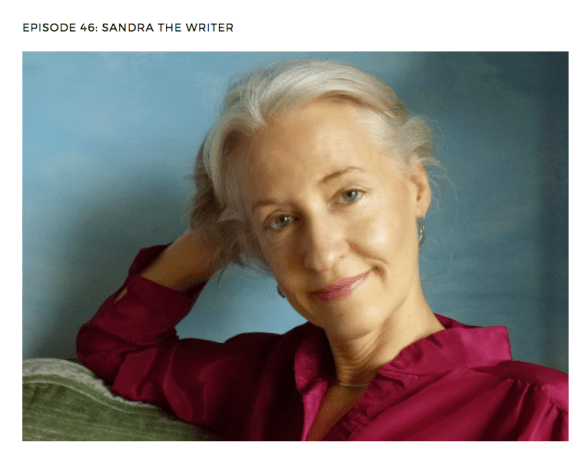
 Sandra Jensen